Evening · The Netherlands, motorway A2
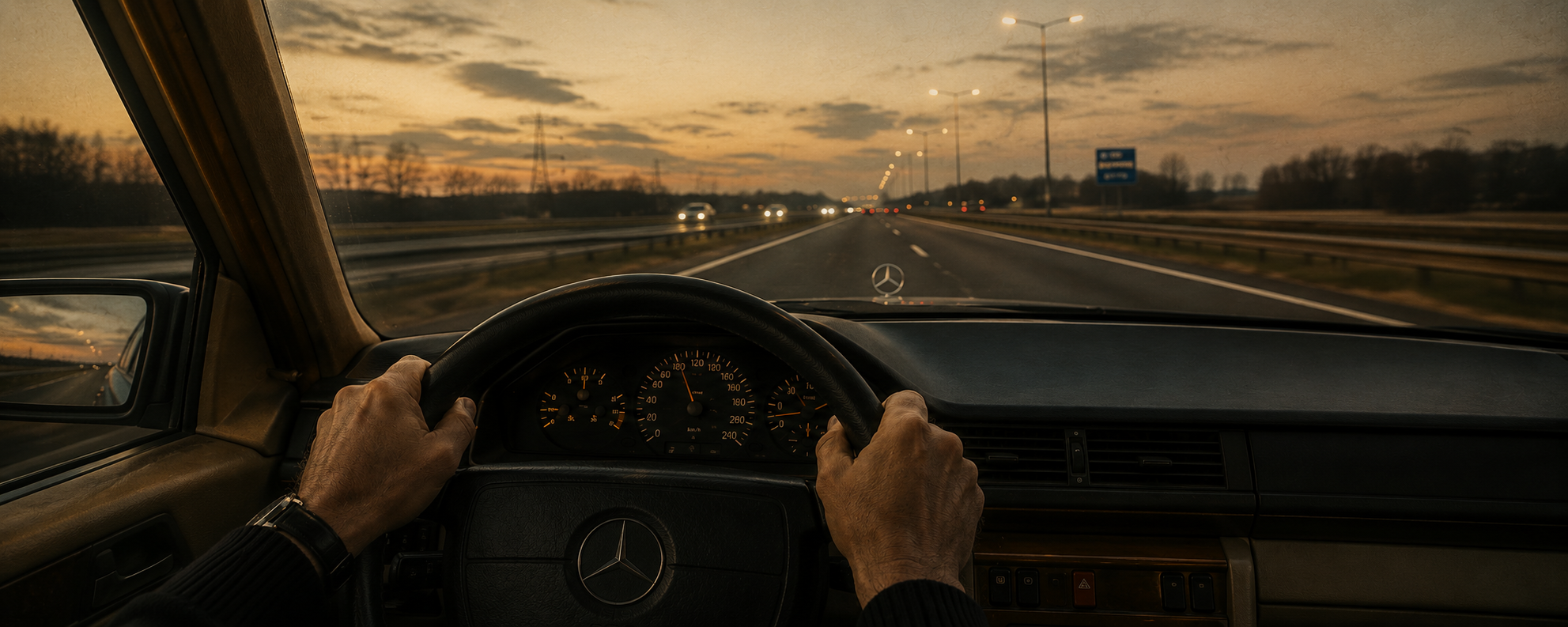
I was driving to a meeting with a client. It was around nine o’clock, the motorway was quiet, my mind was somewhere else.
Not with Peter.
It hadn’t been with Peter for a while.
That’s how it goes with me, out of sight, out of mind.
That’s how it goes with me, out of sight, out of mind.
Not out of indifference. Just how it is.
Then I heard it.
Not from outside.
Then I heard it.
Not from outside.
Not from the radio.
From a place I have no word for, but that I recognised, because I had heard it before.
As a twelve-year-old, lying in bed, worried about a G-d who would be angry if I did something wrong.
A voice, overwhelming, that said: Don’t worry, everything will be all right.
I had talked back, which a twelve-year-old doesn’t do, but I did it anyway.
Lord, who am I that You speak to me?
Now, twenty years later, on the A2 heading towards Den Bosch:
You need to go to Peter. Now.
I said it out loud, as if someone were sitting beside me.
‘It’s late. I have a meeting. He’ll only curse anyway.’
You need to go. If he curses once, you can leave.
Then there was silence.
I took the exit.
Turned around. Towards Mook.
The closer I got, the quieter it became inside me, and the stronger the thought I didn’t want to let in: maybe he’s already gone.
I parked in front of his house.
The front door opened before I had rung the bell.
His partner looked at me. ‘Peter is expecting you.’
In that moment something fell away from me. Impossible to describe, only to feel. The doubt that is always there: did I really hear it?
A voice, overwhelming, that said: Don’t worry, everything will be all right.
I had talked back, which a twelve-year-old doesn’t do, but I did it anyway.
Lord, who am I that You speak to me?
Now, twenty years later, on the A2 heading towards Den Bosch:
You need to go to Peter. Now.
I said it out loud, as if someone were sitting beside me.
‘It’s late. I have a meeting. He’ll only curse anyway.’
You need to go. If he curses once, you can leave.
Then there was silence.
I took the exit.
Turned around. Towards Mook.
The closer I got, the quieter it became inside me, and the stronger the thought I didn’t want to let in: maybe he’s already gone.
I parked in front of his house.
The front door opened before I had rung the bell.
His partner looked at me. ‘Peter is expecting you.’
In that moment something fell away from me. Impossible to describe, only to feel. The doubt that is always there: did I really hear it?
Do I really trust it? That doubt was gone. Not in that moment.
The voice was real.
In the living room stood a hospital bed, in the middle of the space, as if everything around it had been moved aside to make room for what was coming.
He was lying there. Bald. Emaciated. Barely the Peter I had known, a proud man, always in motion, always something to say.
But his eyes were radiant. He knew I was coming.
I took his hand and sat down without saying anything.
He spoke softly, with difficulty, and had to drink a lot of water. His partner leaned towards him.
The voice was real.
In the living room stood a hospital bed, in the middle of the space, as if everything around it had been moved aside to make room for what was coming.
He was lying there. Bald. Emaciated. Barely the Peter I had known, a proud man, always in motion, always something to say.
But his eyes were radiant. He knew I was coming.
I took his hand and sat down without saying anything.
He spoke softly, with difficulty, and had to drink a lot of water. His partner leaned towards him.
‘Peter, please take some morphine. I can give it to you right now.’
‘No.’ Weak, but resolute. ‘I want to be sharp.’
We sat like that for a while. His hand in mine. The silence that was not uncomfortable but full.
Then he looked at me and asked the question as if he had been waiting for it a long time.
‘Jac. Is there a heaven and a hell?’
I thought for a moment.
‘Peter……………. yes. I believe in a heaven and a hell, whatever that may be.’
He nodded slowly.
‘Then I belong in hell.’
I said nothing.
‘I’ve wasted my entire life. Never……… not once………done anything for G-d.’
I was moved. Not sad. Moved, the difference is that being moved opens something.
The only thing that came to me was a story I knew but rarely used.
‘No.’ Weak, but resolute. ‘I want to be sharp.’
We sat like that for a while. His hand in mine. The silence that was not uncomfortable but full.
Then he looked at me and asked the question as if he had been waiting for it a long time.
‘Jac. Is there a heaven and a hell?’
I thought for a moment.
‘Peter……………. yes. I believe in a heaven and a hell, whatever that may be.’
He nodded slowly.
‘Then I belong in hell.’
I said nothing.
‘I’ve wasted my entire life. Never……… not once………done anything for G-d.’
I was moved. Not sad. Moved, the difference is that being moved opens something.
The only thing that came to me was a story I knew but rarely used.
Two men on a cross, beside Jesus. One mocks him. The other turns and says: we are here justly.
He has done nothing wrong.
Stop mocking him.
And then, to Jesus: will you remember me when you go to your Father’s house?
The answer was not a promise for later.
And then, to Jesus: will you remember me when you go to your Father’s house?
The answer was not a promise for later.
It was a promise for now.
Today you will be with me in paradise.
I told him. Not as a sermon. Not as comfort you offer someone because you have nothing else.
Today you will be with me in paradise.
I told him. Not as a sermon. Not as comfort you offer someone because you have nothing else.
As something I believed, and that was perhaps exactly why, that voice on the A2, that exit, that front door opening before I had rung the bell.
‘Peter, perhaps G-d sent me to tell you this.’
He was silent.
But I watched him relax. Something let go.
‘Peter, perhaps G-d sent me to tell you this.’
He was silent.
But I watched him relax. Something let go.
His face changed in a way you cannot make happen, only receive.
Then he looked at his partner.
‘Get chips and frikandellen.’
We ate them together. His last meal.
He died a few hours later.
The funeral was Jewish. Afterwards, a family member came up to me.
‘We’re not big Jesus fans,’ he said. ‘But you did well.’
The question that stayed with me afterwards, and that I carry through this entire book, is not why the voice spoke.
Then he looked at his partner.
‘Get chips and frikandellen.’
We ate them together. His last meal.
He died a few hours later.
The funeral was Jewish. Afterwards, a family member came up to me.
‘We’re not big Jesus fans,’ he said. ‘But you did well.’
The question that stayed with me afterwards, and that I carry through this entire book, is not why the voice spoke.
But why I listened.
And whether I always have.
And whether I always have.